· Выбор и уход
A bulk moissanite order is only as safe as the proof that the stones are moissanite. The trade has three look-alikes that get confused in listings: cubic zirconia, lab-grown diamond, and moissanite itself, and two of them sit at very different price and compliance positions. The buyer's job is not to become a gemologist. It is to run a short, repeatable check on a real sample from the production batch before committing money. This guide explains what actually distinguishes moissanite, the tests you can run yourself or commission, and the one compliance rule that should end a supplier relationship on the spot.
What physical traits actually define moissanite?
Moissanite is silicon carbide. Two widely documented properties separate it from the common look-alikes. First, hardness: on the Mohs scale moissanite sits at roughly 9.25, harder than cubic zirconia and just below diamond at the top of the scale. Second, optics: moissanite is double-refractive, so looking through the stone shows doubled facet edges, whereas a well-cut diamond and most cubic zirconia do not show that doubling. A third, practical trait matters for testing: moissanite conducts heat much like diamond does on many testers, which is exactly why a simple heat-only diamond tester cannot tell the two apart. These are the facts a supplier's spec sheet should match, and the reason your verification starts from the stone, not the listing photo.
How do I test a moissanite sample before ordering in volume?
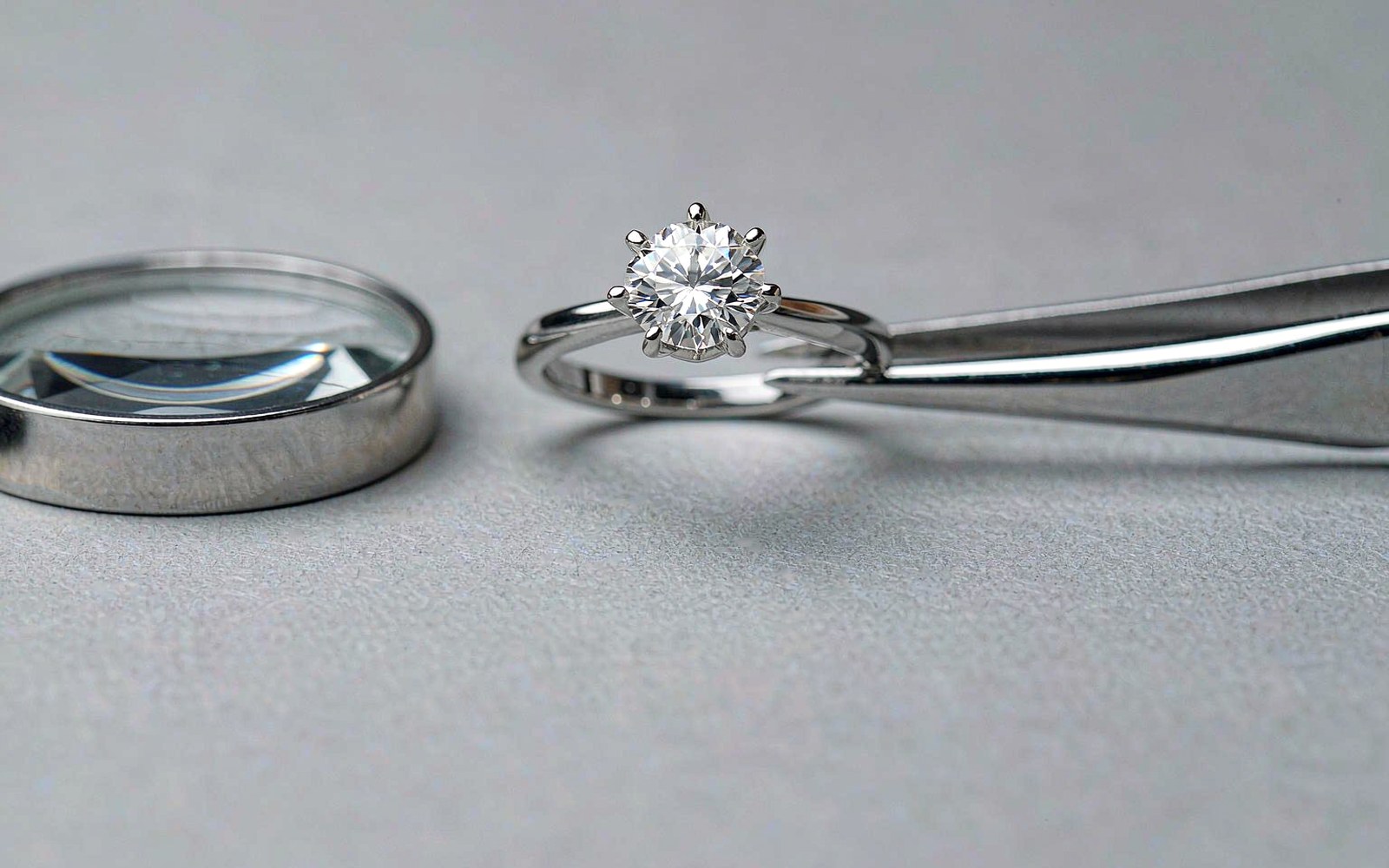
Run three checks on a sample pulled from the actual production batch, not a showpiece made on a separate bench. One: a moissanite-specific tester, one that measures both thermal and electrical conductivity, will read moissanite correctly, where a heat-only diamond tester will misread it as diamond. Ask the supplier which tester they used if they claim a pass. Two: under 10x magnification, check the facet junctions for the doubled image that double refraction produces. A stone with no doubling is not moissanite. Three: send one stone to an independent laboratory for a grading report that names the material as moissanite. The visual check is the fastest place to start; the independent report is the most defensible. Use at least two, and keep the sample sealed so the stone you test is the stone you later receive.
Does a grading report prove the stone is moissanite?
A grading report can confirm the material, but only if it names moissanite explicitly and ties to the stone you hold. A report is a document from a specific laboratory about a specific stone. It is the lab's stated assessment, not a regulator's approval and not a warranty. What it does not do matters as much as what it does: it does not certify that every stone in your parcel matches, and it is not tied to your order by default. The verification step is to match the report number to the physical stone and to confirm the issuing laboratory actually exists and issues reports in that format. A report that names the stone as moissanite and matches your sample is strong evidence. A stack of unmatched reports is decoration.
What sample and inspection terms should I confirm in writing?
Testing only works if the sample is real. Before you request it, confirm in writing that the sample comes from the same production line and process as bulk production, not a separate bench. Confirm who pays for shipping in each direction, and how long the sample takes before it ships. Then put the acceptance criteria in the purchase order: the material must be moissanite, the grading report must name moissanite, and a third-party inspection at the factory is permitted before the balance is paid. A supplier who welcomes written acceptance criteria and a third-party check is a supplier who has passed audits before. One who resists is handing you the dispute in advance. The first-order checklist at /en/faq/ covers the remaining written terms.
What is the compliance line every moissanite supplier must respect?
Moissanite is a distinct material and must be described as such. In the United States, the Federal Trade Commission Jewelry Guides, revised in 2022, require that a stone be described by its true identity and prohibit presenting moissanite as a diamond. That obligation transfers to your brand the moment you list the item. If a supplier's paperwork or your own product page blurs moissanite into diamond or diamond-like language without naming moissanite, the compliance liability lands on you, not them. The simple rule: every product page and invoice states moissanite, carat is stated as diamond equivalent weight, and no document implies the stone is mined diamond. Our education page at /en/what-is-moissanite/ explains the terminology in plain language, and the styles in /en/rings/ and /en/necklaces/ ship with documentation you can check against this list.
When should I walk away from a moissanite offer?
Four findings should end the conversation. One: the supplier will not let you test a sample or send one to an independent lab. Two: a diamond tester passed claim with no moissanite-specific test and no grading report that names moissanite. Three: paperwork or a listing that describes the stone as diamond or refuses to print moissanite in writing. That is a compliance red flag, not a wording preference. Four: the same grading report number appears on multiple stones, or no report number can be matched to the stone you hold. Any one of these means the proof is not there. Pay only after at least two independent checks agree the stone is moissanite.
The practical takeaway
Confirm before you commit. Pull a sample from the real production batch, run a moissanite-specific test and an independent grading report, match the report number to the stone, and keep moissanite on every document. These steps turn a trust-based purchase into a checkable one. Browse the catalog at /en/rings/, /en/necklaces/ and /en/earrings/ to choose trial styles, and reach the team through /en/contact/ before you wire a deposit. A supplier who answers the testing questions point by point is the one worth the order.